How The World Grades Beef - USA, AUSTRALIA, JAPAN, EUROPE

How The World Grades Beef - USA, AUSTRALIA, JAPAN, EUROPE

August 17, 2017

Beef is graded based on factors like marbling (intramuscular fat), maturity (estimated age at slaughter), and overall carcass quality. Each country grades their beef differently.

The three predominant grading systems are the US, the Japanese and the Australian.

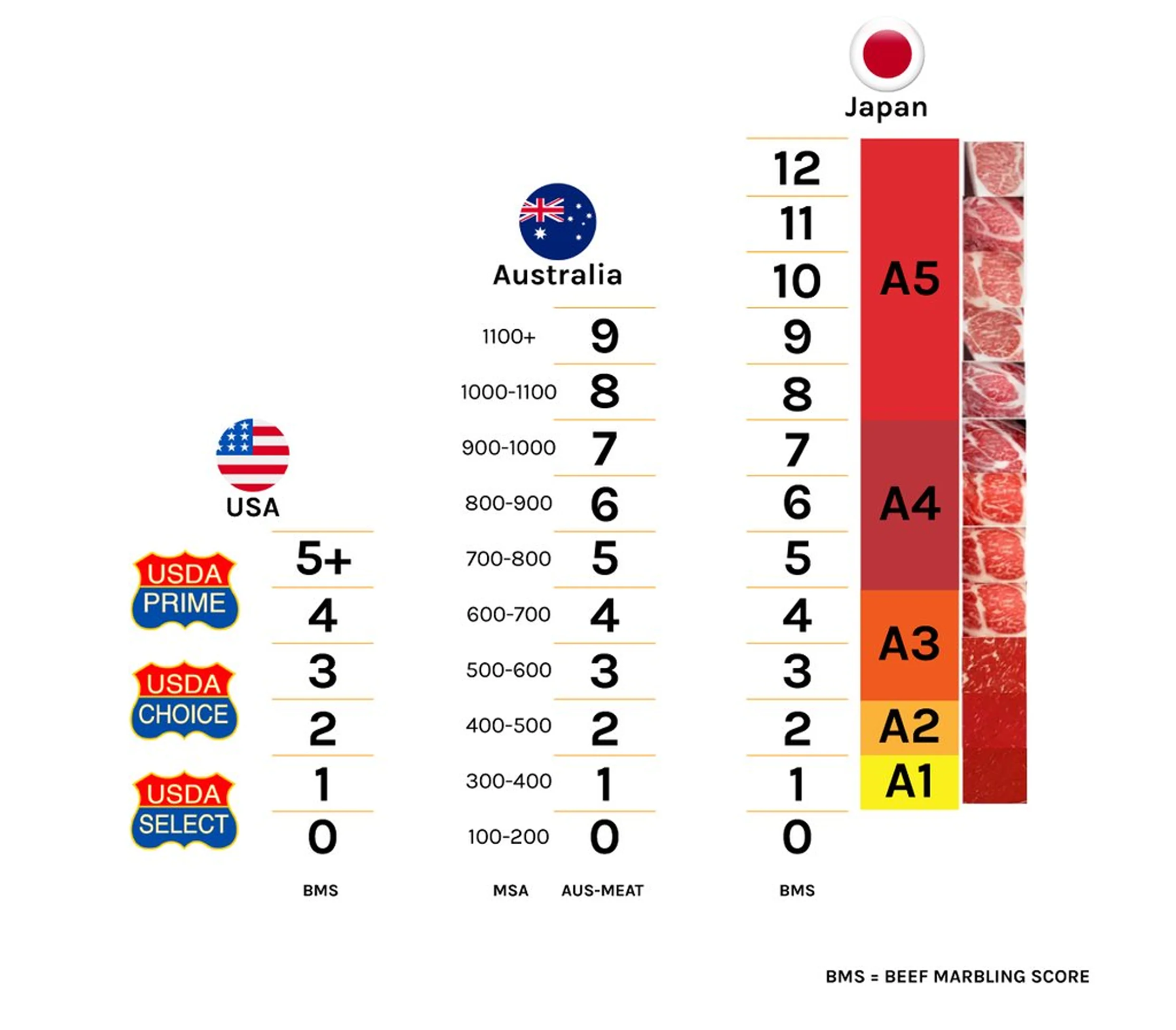
Here is a useful beef grading chart on how these systems compare to each other:

Beef Grading Guide

The Japanese Beef Grading System

In Japan, the grading of meat is managed by the Japan Meat Grading Association (JMGA), serving as a nationwide unified transaction standard for Japan.

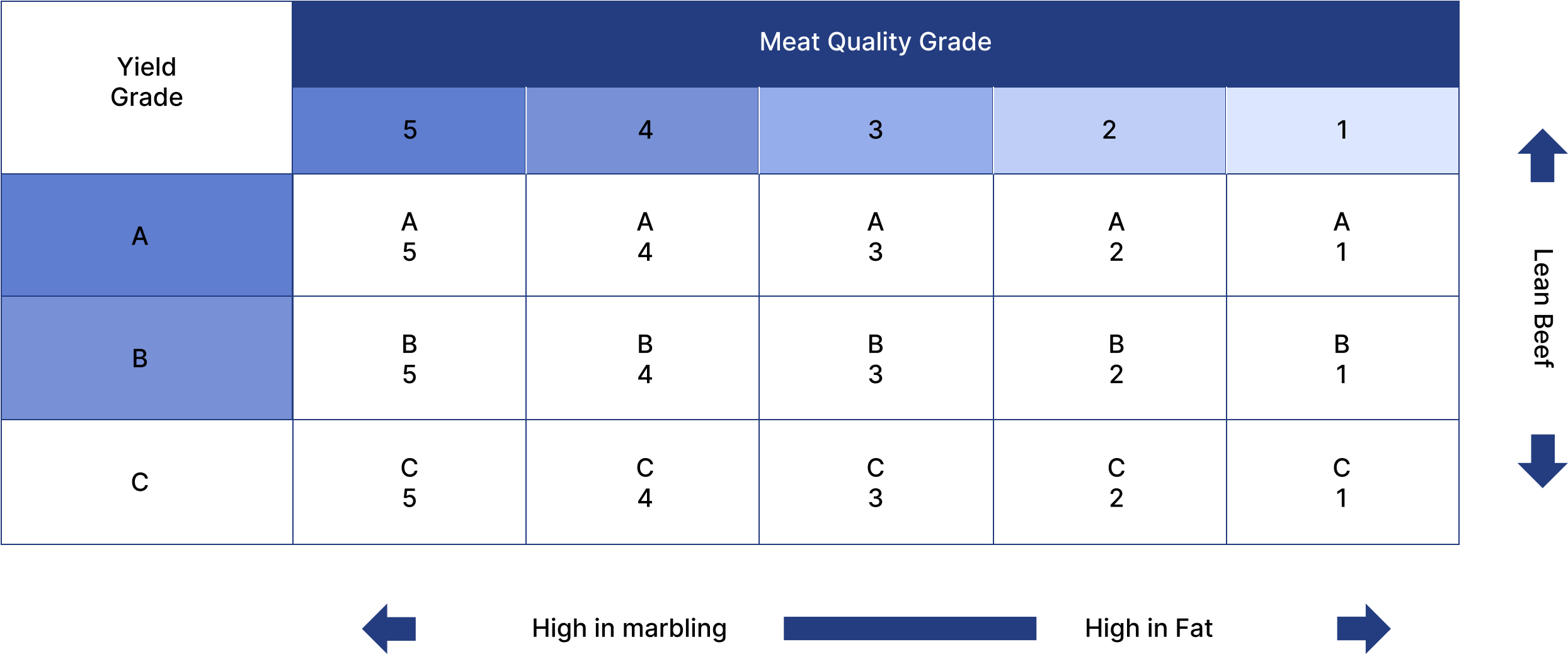
Beef is graded in 15 stages in a combination of Yield Grade and Quality Grade (see chart below).

Yield Grade: the ratio of meat to dressed carcass weight, and is classified into three grades, from A to C (A: 72 and greater;
B: 69 and greater; C: less than 69), according to numbers determined in four categories (rib eye area, rib thickness, subcutaneous fat thickness, chilled carcass weight).

Quality grade is calculated by evaluating four different factors (grades from 5 to 1):
1) Meat marbling
2) Meat color and brightness
3) Meat firmness and texture and
4) Fat color, luster and quality.

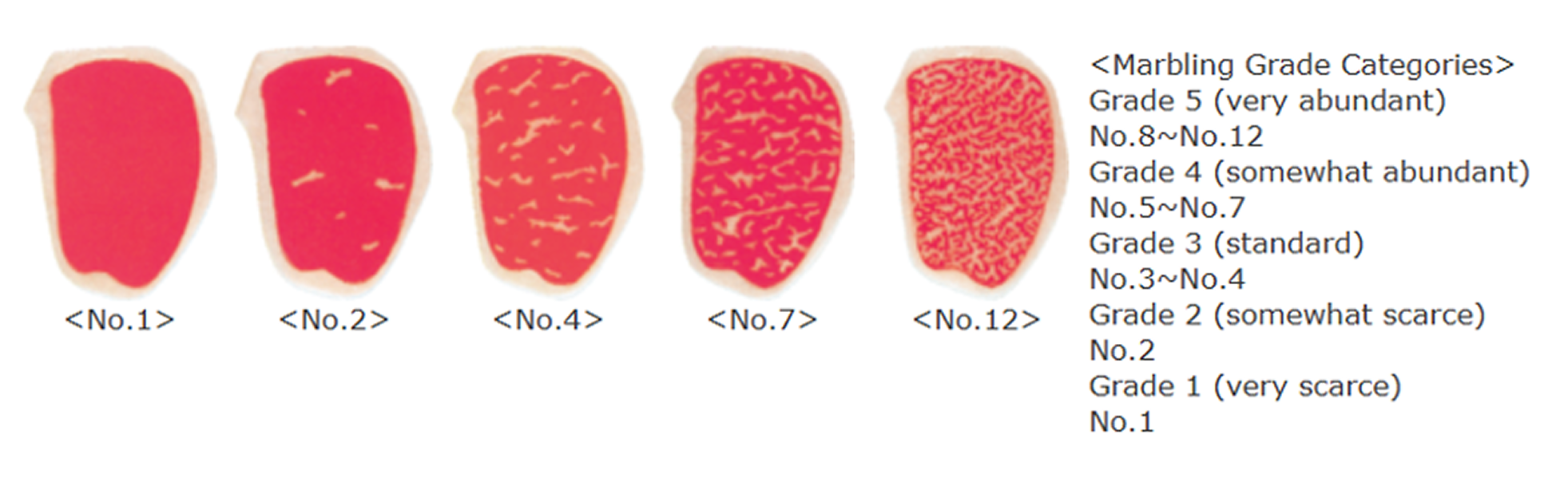
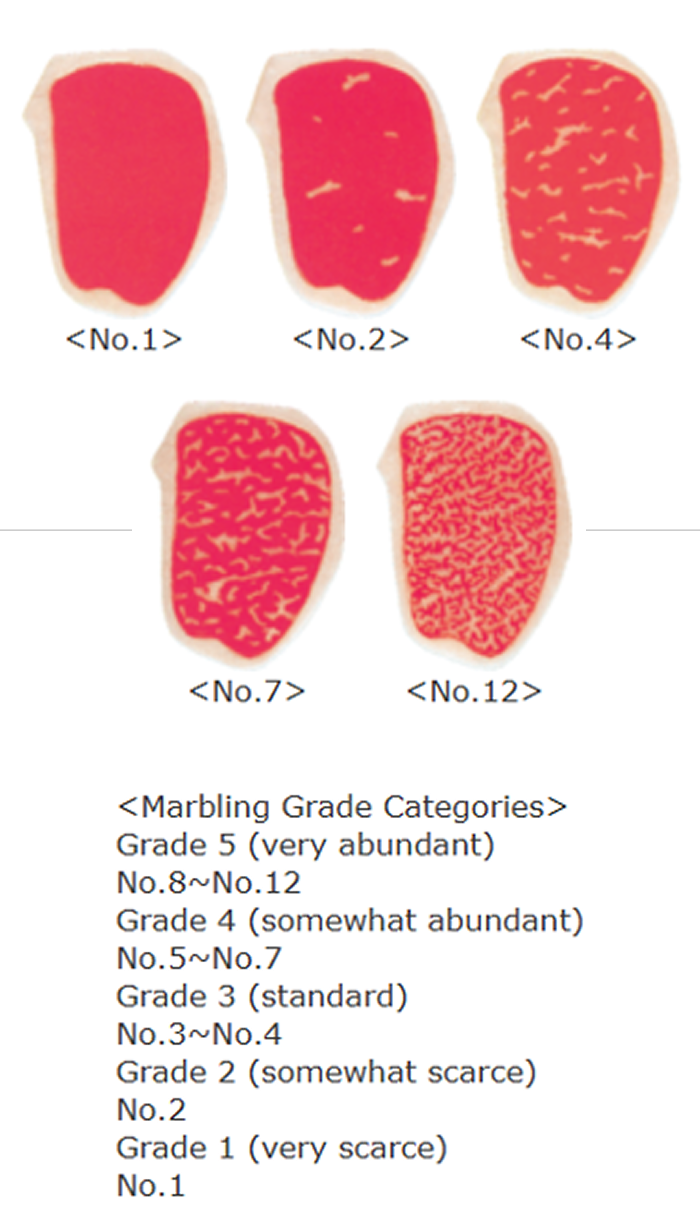
Example of Marbling Standard (B.M.S)

The Beef Marbling Standard (B.M.S.) ranges in stages between No. 1 and No. 12, with each No. categorized as shown above (photos are example abstracts from No. 1 to No. 12).

Quality Grade is categorized by a combination of B.M.S., Beef Color Standard (B.C.S.) and Beef Fat Standard (B.F.S.).

Each factor is grade from 1 to 5, with 5 being the highest score.

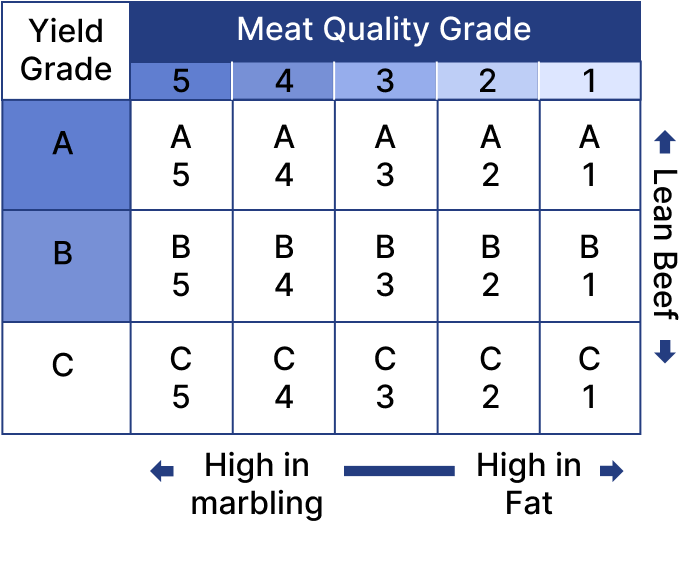
Standard grades and how they are displayed

EUROPEAN UNION(EU) Beef Grading System

The main beef grading system in Europe is the EUROP system, which assesses conformation (shape) and fat level. Combining scores for conformation and fat determines the market most suited for each type of carcase.

The grades are numbered 1-5, YG1 having the highest expected yield and YG5 the lowest. The grades are calculated form a formula that includes the fat depth over the ribeye, the percentage kidney, pelvic and heart fat (KPH), carcass weight and ribeye area.

Above information are from:U.S. Department of Agriculture
Credit to: https://www.ams.usda.gov/grades-standards/carcass-beef-grades-and-standards
Meat and Livestock Australia Credit to: https://www.mla.com.au/marketing-beef-and-lamb/meat-standards-australia/msa-beef/grading/
Japan Meat Information Centre Credit to https://www.jmi.or.jp/en/info/index2.html-
EU: Agriculture and Horticulture Development Board (AHDB)
Credit to: https://ahdb.org.uk/knowledge-library/using-the-europ-grid-in-beef-carcase-classification<